English
 Arabic


When planning an outdoor project, one of the most common questions is about cost. Many developers, contractors, and homeowners compare natural stone vs porcelain cost to determine which material offers better value.
While porcelain tiles are often considered a budget-friendly option, the reality is more complex. The total cost of an outdoor project includes not only material price, but also installation, maintenance, and long-term performance.
Understanding the full picture helps buyers make a more informed decision.
Material Cost: Is Porcelain Really Cheaper?
At first glance, porcelain tiles usually have a lower upfront price compared to natural stone.
- – Porcelain tiles: More uniform production → generally lower cost per square meter
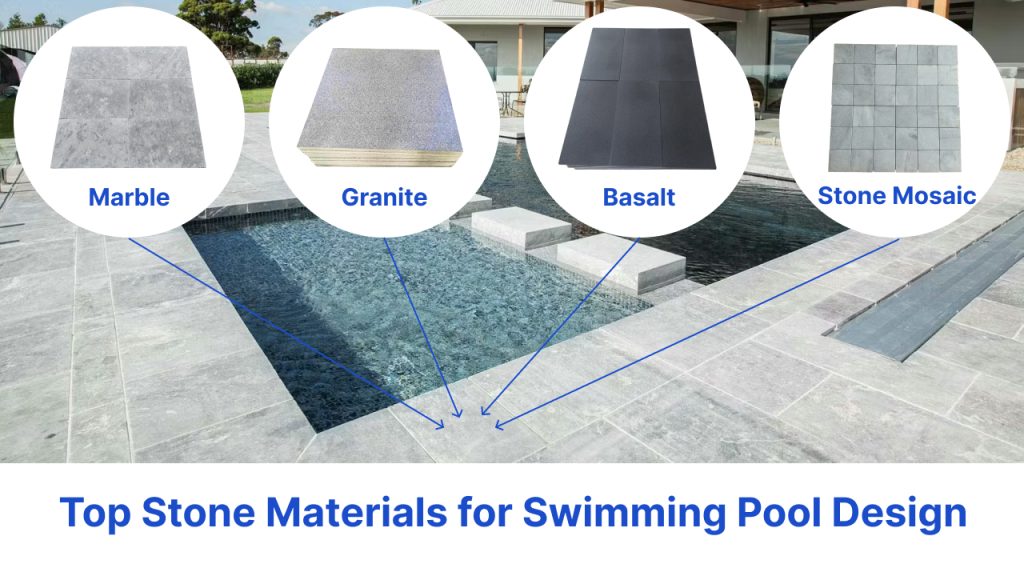
- – Natural stone (marble, basalt, granite): Higher material cost due to quarrying and processing
However, price varies significantly depending on:
- – Stone type
- – Origin (e.g., Vietnam, Europe)
- – Surface finish
- – Thickness
In many cases, competitively sourced natural stone can narrow the price gap.
Installation Cost: A Major Difference
When comparing natural stone vs porcelain cost, installation is often the biggest hidden factor.
Porcelain Tiles:
- – Require precise leveling
- – Usually installed on concrete base
- – More sensitive to substrate movement
- – Skilled labor required
Natural Stone:
- – Can be installed on mortar, sand, or gravel base
- – More flexible in outdoor conditions
- – Easier to adjust during installation
In large outdoor projects, natural stone can sometimes reduce installation complexity, depending on the system used.
Labor Cost in High-Cost Markets
In regions such as the US, Europe, and Australia, labor cost is often the most expensive part of a project.
This is where material choice becomes critical.
- – Small-format tiles (including porcelain or stone) → higher labor cost
- – Larger formats or pre-arranged systems (such as stone paving or mosaic sheets) → faster installation
Because of this, many developers are shifting toward solutions that optimize installation efficiency, not just material price.
Maintenance and Long-Term Cost
Initial price is only part of the equation. Long-term cost matters just as much.
Porcelain:
- – Low water absorption
- – Easy to clean
- – If damaged → often requires full tile replacement
Natural Stone:
- – May require periodic sealing
- – More forgiving with wear and aging
- – Individual pieces can be replaced more easily
Over time, natural stone often ages more naturally, while porcelain may show visible damage if chipped or cracked.
Durability and Lifespan
Natural stone has been used in construction for centuries due to its durability.
- – Granite & basalt → extremely strong for outdoor use
- – Marble → suitable with proper finish and application
Porcelain tiles are durable under normal conditions, but in outdoor environments:
- – Heavy impact can cause cracking
- – Structural movement may affect tile stability
In long-term projects, durability directly impacts cost efficiency.
Aesthetic Value and Property Impact
Material choice also affects the perceived value of a project.
- – Natural stone provides a premium, authentic look
- – Each piece is unique
- – Enhances architectural quality
Porcelain offers consistency, but may lack the natural variation that many high-end projects require.
For luxury developments, natural stone often adds more long-term value.
Real Cost Comparison Summary
| Factor | Natural Stone | Porcelain |
| Material cost | Higher (varies) | Lower |
| Installation | Flexible | Requires precision |
| Labor cost | Can be optimized | Often higher for detail work |
| Maintenance | Moderate | Low |
| Lifespan | Very long | Good |
| Aesthetic value | High-end, natural | Uniform |
Which Option Offers Better Value?
The answer depends on project priorities.
- – If the goal is lowest upfront cost, porcelain may be suitable
- – If the goal is long-term value, durability, and aesthetics, natural stone is often the better choice
In many outdoor projects, especially in high-end or large-scale developments, the total cost of ownership favors natural stone over time.